


Samvel Meliksetian
(Continued. Beginning…)
Part 12
Armenia’s Adaptation to Closed Borders: Unrealized Projects and the Deterioration of Old Infrastructure
The Armenian side made attempts to adapt to closed borders and the changing transport geography of the region, shaped by Azerbaijan through the development of transport routes across Georgian territory. Under these conditions, Yerevan put forward its own transport and transit projects aimed at overcoming isolation and securing Armenia’s status as a transit country. Given the closure of the borders with Azerbaijan and Turkey, the implementation of such initiatives was possible only through a combination of two open routes—via Georgia and Iran.
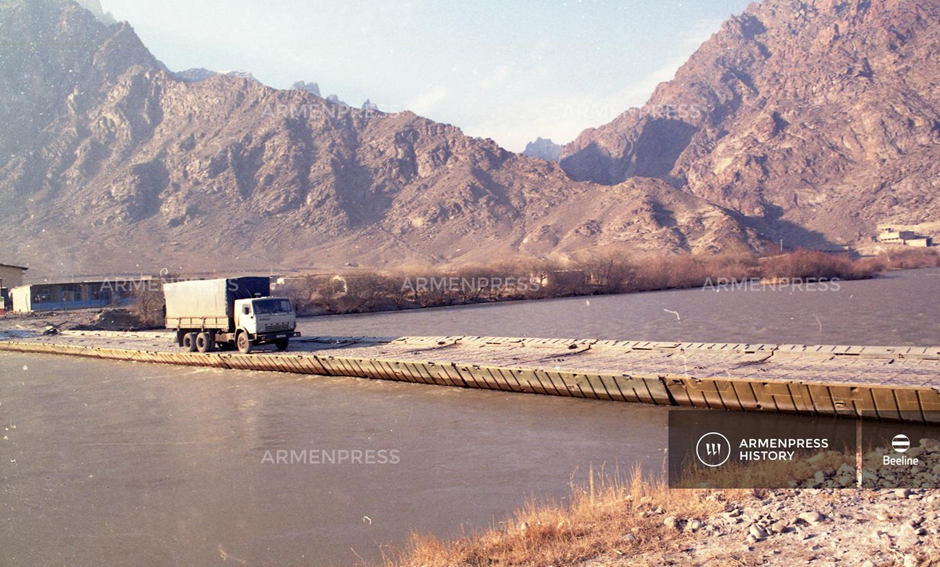
A pontoon bridge across the Araks River on the Armenian-Iranian border, 1992 (photo by Armenpress).
The relevant projects covered both the energy sector (in particular, the construction of the Iran–Armenia gas pipeline) and the development of rail and road transport. The attempt to diversify gas supply sources and turn Armenia into a transit country for Iranian gas supplies to Georgia and, potentially, Ukraine, following the 2002 announcement of the construction of a 1,420-mm-diameter gas pipeline from Iran, led to a conflict of interests with Russia. This resulted in a sharp increase in the price of gas for Armenia (from $54 to $110 per thousand cubic meters), after which the Armenian side made concessions: the pipeline’s diameter was reduced to 770 mm, and the controlling stake in “Armrosgazprom” was transferred to Russia’s “Gazprom” in 2006. Subsequently, “Gazprom” increased its share in Armenia’s gas sector to 100% (2014). Attempts by Russia to expand its influence in Georgia in a similar manner, using price blackmail, proved fruitless. Taken together, this demonstrated Russia’s desire to maintain control over the region’s critical infrastructure and prevent the emergence of alternative gas supply routes to Europe through the South Caucasus.
At the same time, the announcement of the construction of the Baku–Tbilisi–Kars railway spurred the Armenian side to seek solutions for modernizing the existing railway network and to propose alternative projects for integration into regional transit flows.
The sharp decline in rail freight volumes in the 1990s (from 33.9 million tons in 1989 to 0.7 million tons in 1998) created critical conditions for the sector’s operation. A turning point came in 1999, when freight volumes doubled to 1.4 million tons. In the subsequent period up to 2008, steady growth was observed, reaching 2.93 million tons in 2007.
International programs played a certain role in this relative stabilization. In 2002–2004, with $14.5 million in World Bank financing, the Ani–Ayrum line (72 km) was partially modernized, and with European Union support, Siemens upgraded the signaling systems. Nevertheless, according to an assessment by the Asian Development Bank (2008), Armenia’s railway infrastructure remained significantly worn out, and without large-scale investments, a significant portion of the rolling stock and key infrastructure elements could become inoperable by 2018.
In this regard, the World Bank and the ADB recommended transferring the railways to concession management with mandatory investments of at least $170 million over the first 10 years, as well as active state participation in improving the sector’s efficiency, including the development of infrastructure for transporting bulk cargo. If these measures were implemented, freight traffic was projected to grow to 4 million tons by 2018, and upon the opening of the border with Turkey—to 9 million tons.
Special attention was given to the need to subsidize passenger transport, which had been steadily declining: from 3.5 million passengers in 1990 to 1.1 million in 2003 and 0.7 million in 2006. It was also recommended to optimize staffing levels: by 2006, the workforce numbered about 4,750 people (compared to 12,000 in the late 1980s), which was considered excessive.
In 2006, the Armenian government announced its intention to put the railways out to concession. By 2007, two companies had been admitted to the tender—Russian Railways (RZD) and Rail India Technical and Economic Services, the latter of which subsequently withdrew from the tender. As a result, the Russian side emerged as the winner, offering terms that exceeded the recommendations of international institutions: investments of $230 million over the first 5 years (compared to $170 million over 10 years), and the total investment over 30 years was to amount to $572 million ($170 million for rolling stock and $400 million for infrastructure).
At the insistence of the Armenian side, the concession agreement enshrined key provisions such as the principle of open access for other operators (primarily the Georgian side—an important measure in light of the potential opening of the Kars–Gyumri–Tbilisi line), as well as the government’s right to regulate tariffs for strategic cargo.
In the initial phase, following the agreement’s entry into force in 2008 and the establishment of the South Caucasus Railway (SCR) company, the Russian side demonstrated a willingness to expand the investment program. In particular, Russian Railways announced the possibility of increasing investments to $610 million upon the opening of the border with Turkey by the end of 2009, to $1.8 billion with Azerbaijan, and to $2.1 billion upon the restoration of the Abkhazian railway section.
During the same period, additional projects were actively discussed, including the construction of a railway line to Zvartnots International Airport, the Vanadzor–Fioletovo line, and one of the most ambitious projects—the Armenia–Iran railway as part of the North–South transport corridor, which became a key part of Serzh Sargsyan’s campaign promises in 2008, alongside the construction of a new nuclear power plant.
By 2010, the project to build the Fioletovo–Vanadzor railway was in the stage of practical discussion and preparation for implementation. The idea for this line dates back to the early 1920s and was viewed as a logical extension of the railway project through the Aghstev River valley, aimed at shortening the Yerevan–Tbilisi route. The project was subsequently revisited in the 1960s and in the late 1980s, and in independent Armenia it became one of the most realistic and high-priority areas for optimizing the railway network.
In 2004, the construction cost was estimated at $30–50 million, but by 2008 it had risen to $91 million. By the end of 2010, three route options were under consideration, with lengths of 28, 31.4, and 33 km; in 2011, the government approved the 31.4-km option.
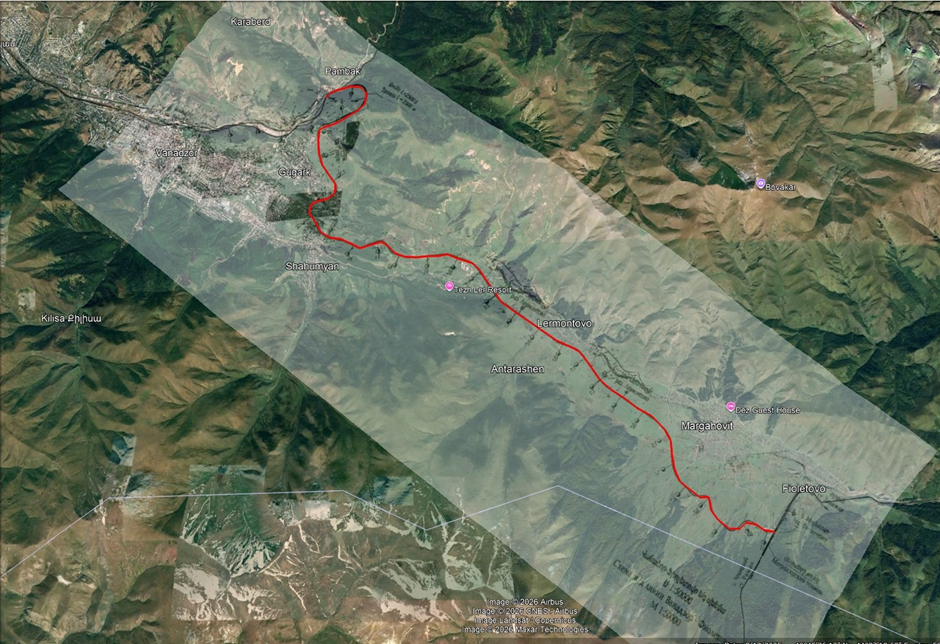
One of the projects for the Fioletovo–Vanadzor railway (length: 31.4 km).
The construction of the Fioletovo–Vanadzor railway would reduce the distance between Yerevan and Tbilisi (and thus the route from Julfa to the Black Sea ports) by approximately 70 km. Moreover, upon the opening of the Armenian-Azerbaijani border and the restoration of the line through the Aghstev River valley, this section would provide the shortest railway route between Kars and Baku—about 730 km, compared to 889 km via the Kars – Gyumri – Nakhichevan – Baku line and 829 km via the Baku – Tbilisi – Kars route. According to an estimate by the Asian Development Bank (2008), the project could have reduced the cost of transporting each ton of cargo from Black Sea ports to Yerevan by approximately $2. Despite this, as well as the South Caucasus Railway’s initial willingness to begin construction on a co-financing basis, the project was never implemented . As early as 2012, the company’s management declared the project unprofitable, even though the Armenian authorities had continued to assert the relevance of constructing this section for another two years.
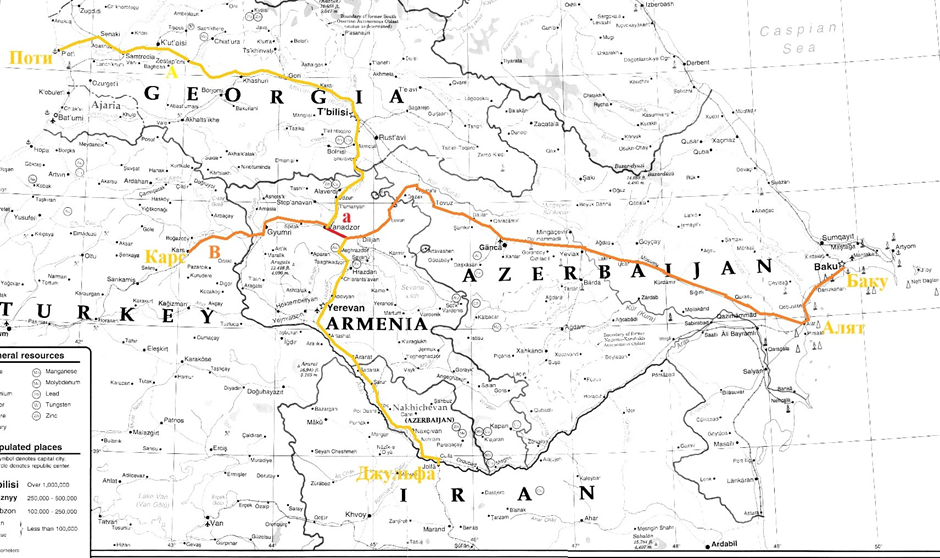
An illustration of the role of the Vanadzor–Fioletovo line in creating the shortest rail routes between the Black Sea ports and Iran, and between Kars and Baku. The basis for this map and all similar maps was the 1994 map of the Caucasus region from the University of Texas Library —https://maps.lib.utexas.edu/maps/commonwealth/caucasus_region_1994.jpg
By this point, the estimated costs had also risen significantly: while in 2008 the cost of the 32-kilometer section was estimated at $91 million, by 2012 Russian Railways was citing a range of $250–500 million. One of the reasons for the Russian side’s initial interest was likely the expectation that the border with Turkey and Azerbaijan would open as part of so-called “soccer diplomacy,” which could transform the Vanadzor –Fioletovo–Hrazdan and Vanadzor–Ijevan into a key transport system for the region along the north–south and west–east axes. A more ambitious project was the idea of building an Armenia–Iran railway as part of the north–south transport corridor (the so-called Southern Armenian Railway). This project became one of the central elements of Serzh Sargsyan’s 2008 election campaign and was viewed as a response to the launch of the Baku–Tbilisi–Kars railway, representing an attempt to overcome the country’s transport isolation.
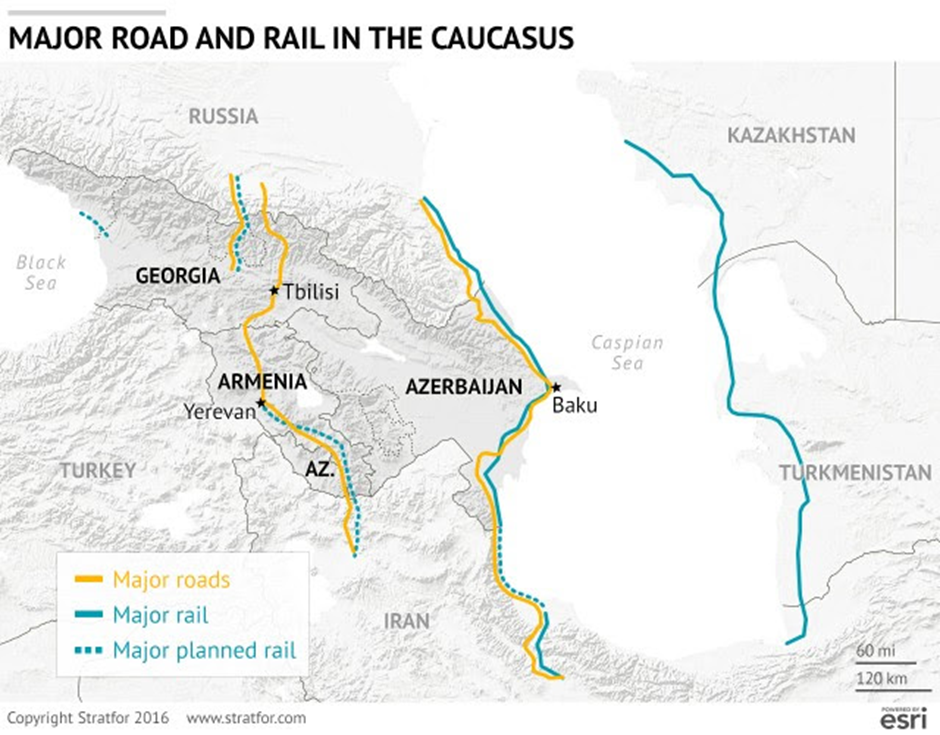
Visual comparison of competing North-South projects across the territories of Armenia and Azerbaijan, 2016. Source — https://worldview.stratfor.com/
Despite the interest of Russian Railways, the World Bank, and the Armenian government, as well as the signing of a concession agreement with the company “Russia FZE” in 2012 and a memorandum with Iran in 2016—which envisaged the start of construction on the Iranian section after 30% of the work had been completed on the Armenian side—the project was never implemented.
Various route options were considered, of which the most promising were deemed to be the routes Yeraskh–Yeghegnadzor–Sisian–Kapan–Meghri and Gagarin–Gavar–Martuni–Jermuk–Sisian–Meghri. The latter, stretching 304 km across Armenian territory, would have required large-scale construction: more than 60 tunnels with a total length of 102 km (over a third of the route), 84 bridges and overpasses, as well as 27 stations. The capacity was estimated at 15.4 million tons by 2025, increasing to 18.3 million tons by 2035, with a potential expansion to 25 million tons, and a planned annual passenger traffic of 1.2 million people. Additionally, the construction of approximately 60 km of railway within Iran was envisaged.
The project’s cost rose from $1.6 billion (2008 estimate) to $3.2–3.5 billion. The plan was to finance 60% of the project through loans from Chinese banks and 40% through investments from the participating countries (Russia, India, Kazakhstan, and China). Among the key factors hindering implementation was the lack of guarantees from Iran regarding its refusal to build an alternative Rasht–Astara line, which could reduce the project’s profitability.
The third, and smallest-scale, project was a railway branch line from the “Charbakh” metro station to Zvartnots International Airport. Its length was to be 7.8 km (of which 2.45 km was an existing line and 5.35 km was new construction, including an 810-meter tunnel). Despite its relatively low cost (about $2.7 million in 2012), the project was also not implemented, as the South Caucasus Railway deemed it unprofitable. Discussions of the idea resumed in March 2026 with the possible participation of Italian companies. The only major transportation project whose implementation actually began during the period of the frozen conflict was the North-South Highway (Bavra–Agarak). The 556-km project, with an initial cost of about $1 billion, was intended to create a modern road link between the Black Sea ports and the Persian Gulf (Indian Ocean).
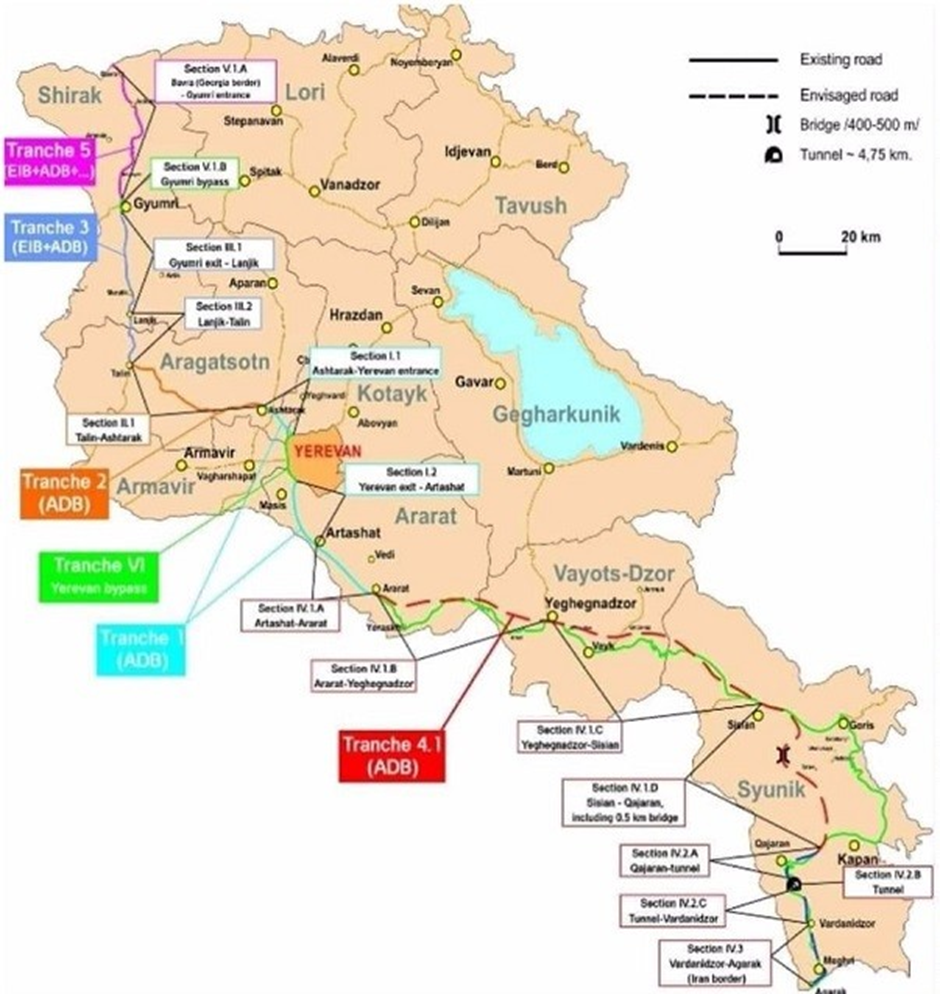
The North-South International Transit Highway Project through the territory of Armenia.
Despite the start of construction, the project timeline was significantly disrupted: the planned completion in 2019 was postponed, according to current estimates, to 2033, and its cost rose to $3–5 billion. By 2025, only about 17.5% of the route had been completed.
Thus, despite the launch of individual infrastructure initiatives, primarily the North–South project, Armenia has failed to implement its strategy of establishing its own transit corridors amid closed borders with Turkey and Azerbaijan. The implementation of key projects has been unreasonably delayed and has not led to a qualitative change in the country’s transport role in the region.
Part 13
Problems with the Russian concession of Armenia’s railways
Although the signing of the concession agreement with Russian Railways in January 2008 made it possible to maintain the operational condition of Armenia’s railways and stabilize freight volumes for a certain period, the agreement itself contained a number of problematic provisions that, over time, led to the accumulation of disagreements and conflicts between the parties.
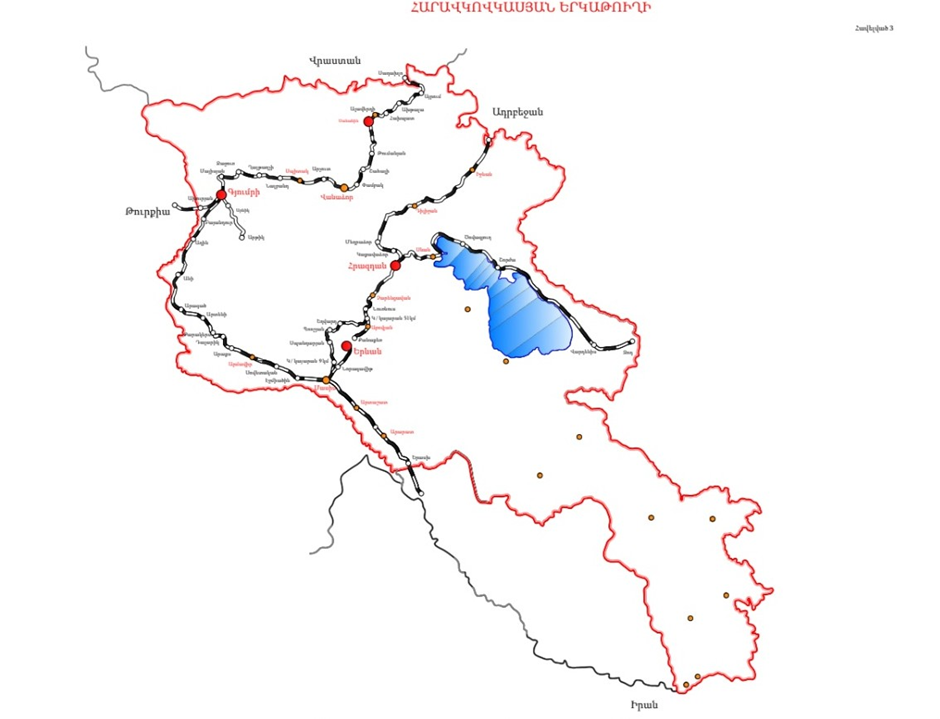
Armenia’s railways transferred to the concession management of South Caucasus Railway (SCR) on the map. Source — https://www.railway.am/infrastructure/arm/havelvac_3.pdf
According to the concession agreement, the transferred assets included the entire Armenian railway system, including the Hrazdan–Dilijan–Ijevan section up to the Barkhudarlu station. However, as early as 1994, due to a landslide on the Teghut–Haghartsin section, the line was effectively divided into two isolated segments: Hrazdan–Dilijan and Haghartsin–Ijevan–the border with Azerbaijan. Nevertheless, by the time the concession was transferred in 2008, the section up to Dilijan Station remained operational.
This is confirmed, in particular, by the railway map published by the South Caucasus Railway, where Dilijan Station is indicated as the final operational point of this route. Meanwhile, the Meghradzor–Dilijan (Meghradzor–Fioletovo–Dilijan) was characterized as one of the most challenging in terms of operation: a 15.3-km climb with an elevation gain of approximately 490 m required the use of double traction.
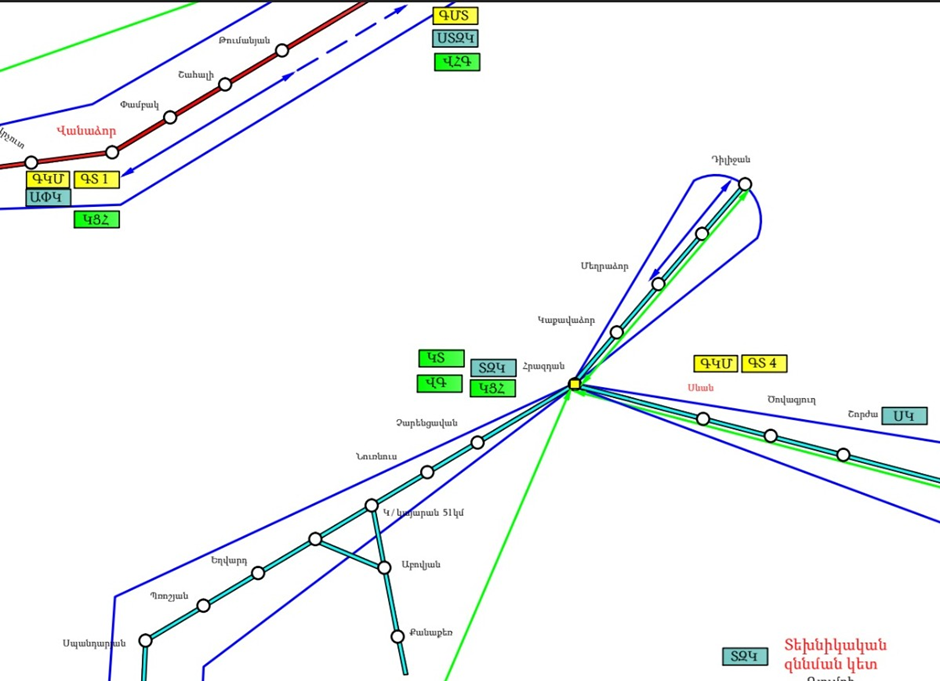
The Hrazdan–Dilijan branch line on the schematic departmental map of the South Caucasus Railway, listed among the operational lines, including the Dilijan–Meghradzor section, is marked as requiring double traction (blue arrow).
Irregular train service, the dead-end nature of the route, a lack of freight demand, and the need for significant investment to maintain the infrastructure’s operational capability led to the suspension of operations on the line and the subsequent mothballing of the Meghradzor Tunnel. The Hrazdan–Meghradzor section was used for an even longer period to serve the Meghradzor gold deposit, but it has also been abandoned in recent years.
At the same time, maintaining profitable transport operations could theoretically have been ensured by developing passenger services, primarily focused on tourism. However, implementing this scenario would have required significant investments in modernizing the locomotive fleet; addressing the ventilation issue in the Meghradzor Tunnel, as well as constructing the Vanadzor–Fioletovo line, would have turned the line into a through route.
At the same time, the concession agreement explicitly sets forth the operator’s obligations. In particular, the agreement states that “the Concessionaire must ensure the operational condition of existing railway lines and trains.” Furthermore, Article 9, Paragraph 3(1) provides that:
“The Concessionaire is obligated to return the Concession Assets to the Grantor (the Government of Armenia – S.M.) in a condition that allows for the operation of the railway network and the continued provision of services for at least three (3) more years without additional investments, except for routine maintenance.”
However, by 2024, according to a Factor TV investigation, 30.2 billion drams of the planned 174.6 billion drams in investments remained unspent. Given the needs for the restoration of the Hrazdan–Dilijan section and other capital-intensive projects, this amount appears insufficient to meet the contract requirements by the time the concession expires. This makes the concessionaire’s failure to fulfill one of its key obligations inevitable.
The status of the Dilijan–Ijevan–Barkhudarlu. Despite its formal inclusion among the concession assets, it remains unclear what specific obligations the concessionaire bears regarding this segment in the absence of plans for its restoration and operation. Thus, a legal “gray area” is emerging, calling into question the prospects for restoring this route under the current concession model.
While the initial phase of the concession was marked by active statements and discussions of large-scale infrastructure projects, as the limitations of their implementation became apparent, relations between the Armenian government and the South Caucasus Railway gradually deteriorated.
One of the first manifestations of the conflict was the 2014 dispute between the South Caucasus Railway and the State Commission for the Protection of Economic Competition, in which the Armenian side accused the company of overcharging for the transportation of petroleum products and conducting sham tenders.
After the events of 2018, the tensions intensified. In August 2018, searches were conducted at the company’s offices, and the Prime Minister of Armenia announced violations amounting to approximately $60 million. In response, the Russian side denied the allegations, and Russian Deputy Minister of Transport Vladimir Tokarev stated that Russian Railways might terminate the concession agreement. Despite the legal proceedings, the conflict did not lead to a revision of the management model.
A new phase of tension arose in December 2025, when Armenian Prime Minister Nikol Pashinyan stated the need for accelerated restoration of the Akhurik–Turkish border and Yeraskh–Azerbaijani border sections. It was emphasized that if the concessionaire is unable to implement these projects, the state is prepared to remove the relevant sections from the concession and finance their restoration independently (estimated cost: $10 million for the Yeraskh–Azerbaijani border section and $32.4 million for the Gyumri–Akhurik– the border with Turkey).
In January 2026, the Armenian side reiterated these demands, additionally noting the need to restore the line in the direction of Ijevan. In subsequent statements, Nikol Pashinyan also noted that the Russian concession model is perceived by Armenia’s international partners as a factor that reduces the investment attractiveness and competitiveness of Armenian railway routes, in particular the Yeraskh–Gyumri route, compared to alternative projects such as Kars–Diluju. One of the solutions considered was the possibility of transferring the concession to a third party (for example, the UAE or Kazakhstan).
The Russian side’s reaction was immediate. Sergei Shoigu, head of Russia’s Security Council, stated that without the participation of a Russian company, Armenia’s railway system could face collapse, citing current operational figures: approximately 500,000 passengers, 1.6 million tons of cargo, and 2,500 employees.
It should be noted, however, that at the time the railways were transferred to a concession in 2007, key indicators were higher: the workforce numbered about 4,300 people, and transport volumes were at a higher level.
| Year | Freight traffic, million tons | Passengers, million people |
| 2007 | 2.98 | 0.6 |
| 2008 | 2.75 | 0.7 |
| 2009 | 2.94 | 0.8 |
| 2010 | 3.06 | 0.8 |
| 2011 | 3.27 | 0.6 |
| 2012 | 3.46 | 0.6 |
| 2013 | 3.27 | 0.4 |
| 2014 | 3.05 | 0.4 |
| 2015 | 2.53 | 0.4 |
| 2016 | 2.61 | 0.4 |
| 2017 | 2.64 | 0.4 |
| 2018 | 2.88 | 0.4 |
| 2019 | 3.2 | 0.4 |
| 2020 | 3.2 | 0.3 |
| 2021 | 3.12 | 0.4 |
| 2022 | 3.5 | 0.5 |
| 2023 | 2.1 | 0.5 |
| 2024 | 1.42 | 0.6 |
Table. Volume of freight and passenger traffic in Armenia in 2007 and after the transfer of the railways to the concession management of the South Caucasus Railway.
The concession agreement for the Armenian railways provides for specific termination mechanisms, which means there are formally sufficient legal grounds for terminating the agreement. In particular, Article 17 of the agreement stipulates that the concession agreement may be terminated before its expiration in several cases: in the event of a material breach of obligations by one of the parties, in the event of force majeure, and by mutual agreement of the parties.
Of key importance is Article 17-5, which defines what specifically constitutes a breach by the concessionaire. Such grounds include, in particular, prolonged non-payment of concession fees, suspension of railway operations for more than 30 days, a significant decline in the quality of services provided, bankruptcy, and the transfer of rights under the agreement without the consent of the Government of Armenia.
At the same time, the agreement establishes a fundamentally important provision: the Government of Armenia, as the grantor, has the right to terminate the agreement unilaterally at any time, regardless of the existence of breaches, subject to payment of appropriate compensation to the concessionaire. The amount of compensation depends directly on the grounds for termination.
Thus, the agreement provides for two basic mechanisms for termination:
- due to identified breaches by the concessionaire, in which case compensation is calculated as 50% of the difference between the investments made and the projected profit until the end of the contract term;
- at the initiative of the Government of Armenia in the absence of violations, in which case the full difference between the investments and the expected profit is paid.
Additionally, the agreement contains a clear dispute resolution procedure (Article 18), providing for phased negotiations, and if these fail, recourse to international arbitration under UNCITRAL rules with the venue in Paris (International Chamber of Commerce).
According to estimates for 2024, even in the least favorable scenario for the Armenian side (termination without proven violations), the amount of compensation could amount to approximately $273 million, making termination of the agreement financially costly but feasible from both legal and financial perspectives.
At the same time, developments indicate that the concession issue has moved beyond the realm of purely legal regulation and taken on a distinctly political character. This was clearly evident during Nikol Pashinyan’s visit to Moscow on April 1, 2026, as well as in the subsequent detailed interview with Russian Deputy Prime Minister Alexei Overchuk.
The Russian side effectively made it clear that it does not consider the possibility of terminating the concession agreement, viewing such initiatives as a threat to the interests of Russian business in Armenia. Moreover, public statements have signaled possible retaliatory measures, including pressure on Armenian businesses operating in Russia.
Under these circumstances, the model proposed by the Armenian side—transferring the concession to a third country friendly to both Armenia and Russia (such as the UAE or Kazakhstan)—which Nikol Pashinyan had announced in February ( ), did not receive support from Moscow and was effectively rejected.
Thus, despite the existence of formal legal mechanisms for terminating the concession enshrined in the agreement, in practice this issue has shifted from a legal one to a political one. In the short term, the issue of revising or transferring the concession could become one of the most acute and contentious elements on the agenda of Armenian-Russian relations, creating significant difficulties for Yerevan in the process of modernizing and restoring the country’s railway system.
Part 14
Developments Regarding Communications Since November 2020
The trilateral (Russian Federation, Azerbaijan, and Armenia) Statement of November 10, 2020, signed following the 44-day Karabakh war, enshrined in paragraph 9 the principle of unblocking regional transport links. The document noted that all economic and transport links in the region must be restored, and that Armenia would guarantee the security of transport links between the western regions of Azerbaijan and the Nakhichevan Autonomous Republic. Control over the relevant transport route through Meghri was to be entrusted to the Border Service of the Russian Federal Security Service (FSS). At the same time, the parties also agreed on the construction of new transport links.
The practical implementation of these provisions became the central topic of the meeting between the leaders of Armenia, Azerbaijan, and Russia on January 11, 2021, in Moscow, following which a trilateral working group was established under the leadership of Deputy Prime Ministers Alexei Overchuk, Shahin Mustafayev, and Mher Grigoryan. Throughout 2021, including meetings in Sochi and Brussels, the issues of unblocking transport routes and restoring railways remained central to the negotiation process. As a result, on January 14, 2022, the Armenian government established a working group on restoring rail service along the Yeraskh–Nakhichevan–Julfa–Horadiz route.
At the same time, alternative solutions were discussed, including the use of third-country territories, primarily Georgia, to ensure transport links between Armenia, Azerbaijan, and Russia.
For Azerbaijan, the key priority in the context of unblocking communications remained the establishment of a direct connection with the Nakhichevan Autonomous Republic. As early as February 2021, the construction of the Horadiz–Agbend railway (to the border with Armenia) was announced, and starting in April of that year, the term “Zangezur Corridor” became firmly established in Baku’s official rhetoric. At the same time, statements were made about the possibility of opening the route by force in the event of a refusal by the Armenian side.
The completion date for the Horadiz–Agbend line has been revised multiple times: from the initially announced end of 2023 to 2024, and then to 2025. According to the latest estimates, the road is expected to be put into operation in the second half of 2026. This pattern indicates a systematic discrepancy between the announced and actual timelines for the implementation of infrastructure projects, which casts doubt on the reliability of such forecasts—including with regard to other initiatives, such as the Kars–Diluju line.
In 2021–2023, the issue of unblocking transport routes proved to be closely intertwined with the overall dynamics of the conflict — both around Nagorno-Karabakh and along the Armenian-Azerbaijani border, where armed incidents and the advance of Azerbaijani forces into Armenian territory resumed in May 2021. Against this backdrop, the implementation of the agreements reached was constantly postponed, and Baku’s rhetoric grew increasingly harsh, including demands for arrangements similar to the Lachin Corridor to facilitate communication with the NAR via Meghri.
Starting in 2022, especially following the large-scale September attack by the Azerbaijani Armed Forces on Jermuk and Vardenis and the ensuing crisis in Armenian-Russian relations, the Armenian side began seeking alternative models for opening communications through Meghri that went beyond the trilateral format. The key principle was the preservation of Armenia’s sovereignty and full jurisdiction over transport routes while simultaneously providing security guarantees for Azerbaijan. Following this logic, various solutions were discussed—ranging from involving international operators (similar to the participation of the Swiss company SGS in negotiations regarding the Abkhazian railway) to implementing technical mechanisms for expedited inspections (scanners, etc.).
Azerbaijan’s hardening stance on this issue should be viewed as part of a broader strategy to pressure Armenia. The formation of parallel negotiation tracks allowed Baku to divert the Armenian side’s attention and resources, weakening its position on the Nagorno-Karabakh issue. Faced with limited support from Russia and other international actors , Armenia found itself having to balance the protection of its own sovereignty with participation in the Karabakh process.
At the same time, the Armenian side initially advocated a comprehensive approach to reopening transport links, not limiting itself solely to the route through Meghri. The focus was on several directions: the restoration of the railway through Meghri, the Yeraskh–Sadarak section (which is also important for connections with Iran via the territory of Nakhichevan), the Gyumri–Akhurik–Turkish border line (including the Akhurian-2 station for changing wheel sets from 1,520 to 1,435 mm), as well as the Hrazdan–Ijevan–Gazakh railway, which provided a shorter connection between Yerevan and Baku during the Soviet period.
From 2021 to 2025, cost estimates for restoring these sections varied significantly, often differing considerably from one another as well as from earlier estimates.
According to a study by International Alert (2014), the total cost of restoring the Kars–Gyumri–Nakhichevan–Meghri–Baku route on Armenian territory was estimated at $104 million. Of this amount, $61.5 million was allocated to the Meghri section (with a length of approximately 44.2 km), $13 million to Akhurik, $8 million to Yeraskh–Sadarak, and another $19.2 million to the modernization of the Yeraskh–Masis–Gyumri line.
In subsequent years, the estimates increased significantly. In 2021, the restoration of the Hrazdan–Ijevan line was estimated at $450 million, Meghri at $250 million, Akhurik at $16 million, and the Yeraskh–NAR border section at $5 million. In 2023, the estimate for the Ijevan–Razan line was revised to $318 million, the Akhurik line to $8–9 million, and the Yeraskh–Meghri line to $61.5 million (data from the Armenian Ministry of Finance, likely based on estimates by International Alert). An estimate of $100 million was also cited for the Meghri section, with a construction period of up to two years.
By the end of 2024, the estimates had been revised again: the Meghri section was now valued at $187 million, Gyumri–Akhurik–Turkish border at $32.4 million, the modernization of the Yeraskh–Gyumri line at $95 million, and the Yeraskh–Sadarak section at $11.4 million (estimates by the Ministry of Territorial Administration and Infrastructure of Armenia in collaboration with USAID). At the same time, in official statements since 2021, the timelines for restoring key sections have remained relatively stable: for the Meghri route—two to three years, and for the Gyumri–Akhurik–Turkish border section—about one year.
| Section (length in km) | Cost ($ million) by year | ||||
| 2014 | 2021 | 2022 | 2023 | 2024 | |
| Turkish border – Akhurik (12.4) | 13 | 16 | — | 8–9 | 32.4 |
| Hrazdan–Ijevan (70 + 8.3) | — | 450 | 496 | 318 | — |
| Yeraskh–NAR border (1.6) | 8 | 5 | — | — | 11.4 |
| Meghri (44.2) | 61.5 | 250 | 226 | 61.5 | 187 |
| Gyumri–Masis–Yeraskh (183) | 19.2 | — | — | — | 95 |
Table. Estimated cost of restoring various sections of railways in Armenia from 2014 to 2024.
Part 15
The “Crossroads of Peace” Initiative and the Washington Agreements of August 8, 2025
In October 2023, the Armenian side presented a comprehensive concept for unblocking regional transport routes titled “Crossroads of Peace.” It was based on the principles of preserving the sovereignty, territorial integrity, and full jurisdiction of states over all transport routes passing through their territory. The concept envisaged the restoration of all transport links that existed prior to the outbreak of the conflict between Armenia and Azerbaijan, as well as the resumption of rail and road connections with Turkey.
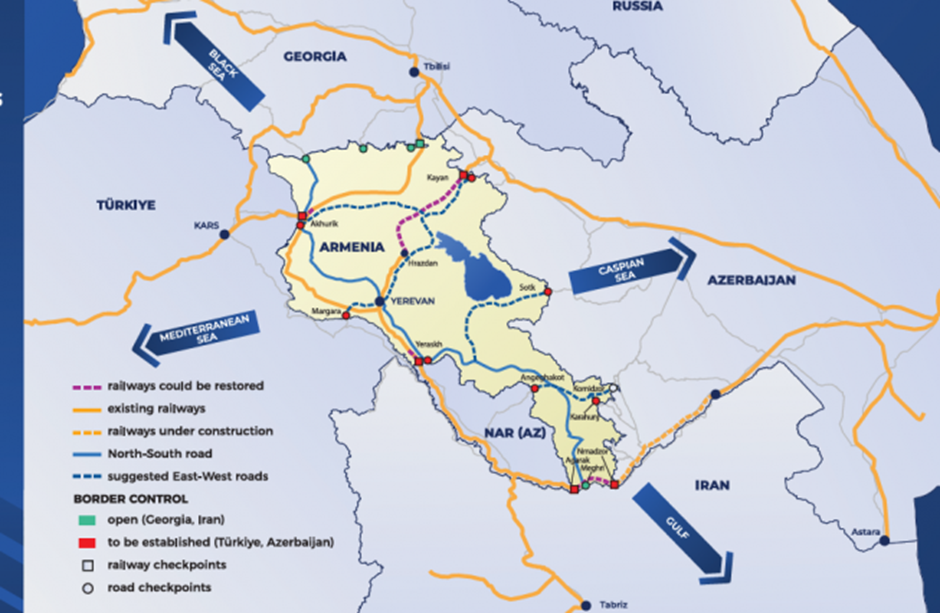
Map of the “Crossroads of Peace” initiative. Source –https://www.primeminister.am/u_files/file/documents/The%20Crossroad%20of%20Peace-Brochure.pdf
The proposal envisaged the opening of an extensive network of border crossings. On the border with the main territory of Azerbaijan—three road (Kayan–Jafarli, Sotk–Kelbajar, Tegh–Lachin) and two railway (Kayan–Jafarli, Nranadzor–Agbend) checkpoints. On the border with the Nakhichevan Autonomous Republic—two road crossings (Yeraskh–Sadarak, Angeghakot–Bichenek) and two railway crossings (Yeraskh–Sadarak, Agarak–Ordubad). Additionally, plans called for the opening of two road crossings (Akhurik–Kars, Margara–Alijan) and one railway crossing (Akhurik–Dogkukapi) on the Armenian-Turkish border.
According to estimates by the Armenian side, with USAID support, the implementation of this model could have generated a cargo volume of 4.64 million tons and a passenger flow of approximately 292,000 people.
The proposed configuration potentially created the shortest routes between Azerbaijan and Turkey, as well as provided more efficient connections with Iran and Black Sea ports, including the Julfa–Gyumri–Kars railway route. At the same time, its implementation required significant investment in infrastructure restoration—primarily on the Meghri, Hrazdan–Ijevan, and Akhurik sections. This is precisely the initiative’s key shortcoming—its most promising elements require restoration work of varying scales, which by April 2026—three years after the initiative was announced—had not yet begun.
A significant step toward institutionalizing the principles of unblocking was taken on August 8, 2025, in Washington, D.C., where updated approaches were formalized, effectively replacing the logic of the November 10, 2020, statement. Paragraphs 3 and 4 of the agreements enshrined two key sets of principles: on the one hand—the sovereignty, territorial integrity, and jurisdiction of states (Armenia’s position); on the other—ensuring unimpeded communication between the main territory of Azerbaijan and Nakhichevan (Azerbaijan’s position), which reflects continuity with previously discussed approaches, including the Madrid Principles. The project was named “Trump’s Route for Peace and Prosperity” (TRIPP).
Of particular importance to the Armenian side is the established principle of mutual benefit for domestic, bilateral, and international transport. Its practical implementation opens up opportunities for the qualitative optimization of Armenia’s transport links, including through the territory of Nakhichevan. In particular, using routes through Nakhichevan significantly reduces distances and transit times: the Yerevan–Meghri route (373 km) through Armenian territory takes about 8–9 hours for freight transport, whereas through Nakhichevan (about 255 km across flat terrain), this time can be cut roughly in half. For passenger vehicles, the difference is about 6 hours and 40 minutes versus 3 hours and 30 minutes.
The development of rail connections via Julfa creates additional opportunities for exploiting the resource potential of southern Armenia, including the Svarants iron ore deposit with proven reserves of about 1.5 billion tons. In 2011, the Chinese company Fortuna Oil acquired a 35% stake in Bounty Resources Armenia and planned to invest approximately $500 million in the development of three deposits, including Svarants, but the project was not implemented, likely due to logistical reasons.
The opening of transport links also creates the conditions for cross-border industrial cooperation. The southern part of Nakhichevan hosts copper, molybdenum, and polymetallic deposits located near railway infrastructure. Given the presence of processing facilities on Armenian territory, this opens up potential for cooperation in the mining sector.
For Armenia’s international connections, the restoration of the Julfa railway junction as a link to Iran is of key importance. With trade between Armenia and Iran projected to reach $768 million in 2025 (primarily consisting of heavy cargo such as cement, metals, petroleum products, etc.), utilizing routes through Nakhichevan could significantly reduce logistics costs. Additionally, this opens up the possibility of optimizing shipments from China via the port of Bandar Abbas, with further transport of goods by rail to Armenia and potentially to Black Sea ports.
It is important to note that as early as in the EU’s initial forecasts (1998), the Iranian route was specifically identified as key to the development of transit via Armenia’s railways in the context of normalized relations with Turkey and Azerbaijan.
According to a 1998 estimate by the European Commission, the total volume of transit traffic through Armenian territory in the first few years following the opening of transport routes could have reached approximately 685,000 tons per year, of which 515,000 tons (more than 75%) were destined for Iran.
Thus, as early as the initial strategic planning phase, the EU effectively established the logic of using Armenian territory as a transit corridor (within the framework of the TRACECA initiative) primarily to link Iran with Black Sea ports, Russia, and Ukraine, rather than exclusively for transport between Turkey and Azerbaijan.
| Transportation Route | Volume (tons per year) |
| Turkey — Azerbaijan/Central Asia | 130,000 |
| Turkey – Georgia | 40,000 |
| Iran — Georgia | 105,000 |
| Iran – Russia | 210,000 |
| Iran – Ukraine | 150,000 |
| Iran — Black Sea ports | 50,000 |
Table. European Commission estimate of transit through Armenian railways in the event of normalized relations with Azerbaijan and Turkey (1998).
In a broader context, the normalization of Iran’s relations with the United States and the Gulf states could expand the potential for using Iran’s transport system to diversify energy supplies to Armenia, including liquefied natural gas and petroleum products, which would also reduce dependence on Russian supplies.
As a result, the opening of these transport links significantly increases the role of Julfa and Nakhichevan as transport hubs—both within the Middle Corridor and along alternative routes, including the Turkey–Iran, the Black Sea–Indian Ocean (Batumi–Tbilisi–Yerevan–Julfa–Iran), and the north–south axis (Derbent–Baku–Horadiz–Meghri–Julfa–Iran).
Finally, one possible element in implementing the Washington agreements and realizing mutual benefits could be the restoration of certain sections of internal infrastructure, including the Goris–Kapan highway, part of which came under Azerbaijani control in 2021 and was closed. Despite the existence of alternative routes (Tatev–Ltsen and the prospects of the North–South project), its partial restoration could have significant symbolic and social importance for border settlements, including Shurnukh.
Part 16
A New Corridor Amid Underutilized Capacity: The Logic Behind the Kars–Diluju–Nakhichevan Project
Since the early 1990s, particularly following the closure of the Armenian-Turkish border in 1993, there has been discussion of the idea of constructing the Kars–Nakhichevan railway, capable of connecting the Nakhichevan exclave of the Republic of Azerbaijan with Turkey. Following the approval of the Kars–Akhalkalaki railway project in 2006–2007, this initiative began to be considered in the context of establishing a bypass route between Baku and Nakhichevan that would bypass Armenia, despite the fact that this would increase the route’s length from 532 km (via Meghri) to 1,134 km.
Political statements regarding the construction of the new line were made during the opening of the Kars–Akhalkalaki railway. It is important to note, however, that the project’s objectives, as articulated in 2008–2017 (2020), differed significantly from the rhetoric following 2021. According to Turkish Transport Minister Ahmet Arslan (2017), the Kars–Nakhichevan line was intended to provide a connection not only between Baku and Nakhichevan, but also access to Iran, India, Pakistan, and South China. The Azerbaijani side took a similar position, viewing the project as part of a broader Eurasian transport architecture.
A new phase of the project began after the Second Karabakh War of 2020. Just three days after the signing of the trilateral statement on November 9, 2020, the Turkish side raised the issue again. From that point on, the project became linked to the concept of the “Zangezur Corridor” and, starting in 2021, began to be positioned as a key element of the Middle Corridor (east–west), effectively aiming to replace the Kars–Akhalkalaki line.
In September 2023, Turkey and Azerbaijan signed an agreement to implement the project; in February 2025, the final route was approved; and on August 22, 2025—two weeks after the statements in Washington—the groundbreaking ceremony took place.
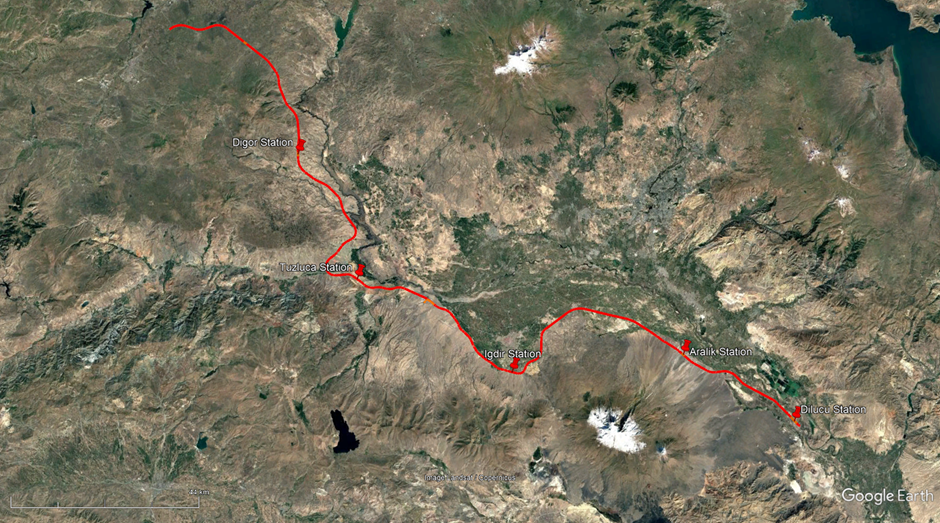
The Kars–Diluju railway route with five main stations.
The project involves the construction of a new 224-km railway line, effectively duplicating the Kars–Gyumri–Masis–Yeraskh line. According to the stated specifications, the line will be double-track and electrified, capable of high-speed passenger and freight transport. It’s capacity is estimated at 15 million tons of freight and 5 million passengers per year—figures close to the originally stated specifications of the Kars–Akhalkalaki project.
The line is planned to include six stations (Digor/Tekor, Tuzludzha/Kohb, Igdir, Aralyk, Diluju), five tunnels, three viaducts, and ten bridges. The total cost of the project is estimated at €2.4 billion, with financing provided by banks in Japan (MUFG), Sweden (EKN), and Austria (OeKB). According to statements, construction is scheduled to be completed by 2029.
The project will allow Turkey and Azerbaijan to establish a new railway route that runs almost entirely through their territory, with the exception of the section in Meghri (about 44 km) that crosses Armenian territory (in line with the TRIPP logic). For Armenia, this means a sharp reduction in transit revenues: according to calculations by International Alert (2014), using the Yeraskh–Gyumri section would generate $9.46 million from 1 million tons of cargo, whereas using only the Meghri section would yield approximately $1.7 million.
Despite the ambitious stated parameters, the project’s implementation faces a number of systemic constraints. First and foremost, experience with similar projects shows that the stated completion deadlines are unrealistic. For instance, the completion of the Kars–Akhalkalaki railway was postponed from 2010 to 2017, and the commissioning date for the Horadiz–Agbend line has been pushed back several times from 2023. In this context, the completion of the Kars–Diluju project by 2029/2030 appears highly unlikely. Moreover, based on similar experiences with other railways, it can be argued that the stated performance characteristics cannot be achieved immediately upon completion of construction and will require further capital-intensive upgrades. The second key limitation stems from the fact that the construction of the new line does not resolve the region’s fundamental infrastructure issues. Already today, there are at least three alternative railway routes between Kars and Baku:
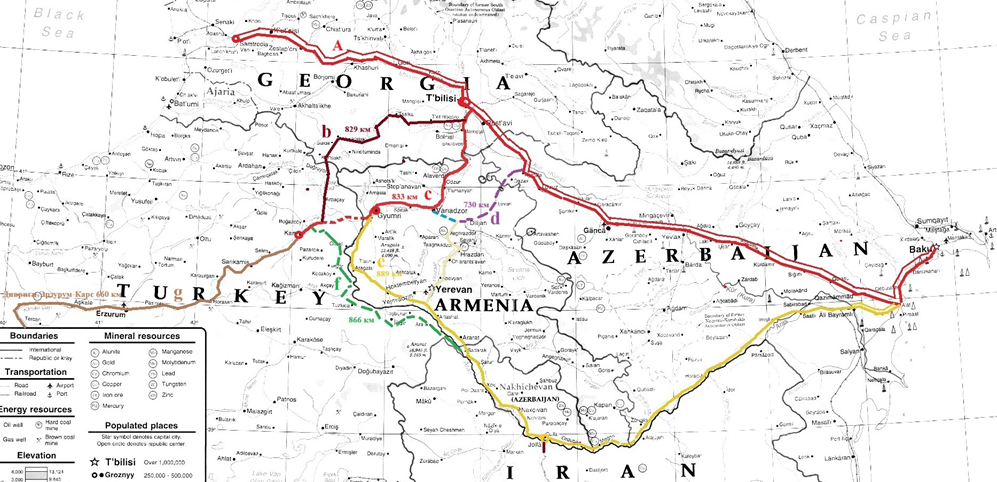
Existing railway lines and lines in need of restoration in the South Caucasus in the context of West-East connectivity:
A – Baku–Tbilisi–Samtredia double-track railway (with branches to Poti and Batumi)
B – Kars–Akhalkalaki (829 km)
C – Kars–Gyumri–Tbilisi–Baku (833 km)
D – Kars – Gyumri – Vanadzor – Ijevan – Gazakh – Baku (with the construction of the Vanadzor–Fioletovo line, approximately 730 km)
E – Kars – Gyumri – Yeraskh – Nakhichevan – Meghri – Baku (889 km)
E – Kars – Igdir – Diluju – Nakhichevan – Baku (866 km)
G – Divrigi – Erzurum – Kars (approx. 660 km)
Kars – Akhalkalaki – Tbilisi – Baku (825–829 km) — the longest route, with a capacity of approximately 5 million tons, yet currently utilized at less than 10% of its capacity. Kars – Gyumri – Alaverdi – Tbilisi – Baku (829–833 km) — a route with a more favorable profile, requiring the rehabilitation of 11 km in Turkey (from the Akyak station operating since 2011 to the border with Armenia) and approximately 12.4 km in Armenia (cost: $34.2 million). Kars–Gyumri–Masis–Nakhichevan–Meghri–Baku (889 km) — a route that duplicates the Kars–Diluju project over a significant section. The capacity of the Armenian segment (Gyumri–Yeraskh) reached 15 million tons, with current operational capacity at 7–8 million tons. Modernization requires approximately $95 million.
Even though the latter route is 23 km longer than the Kars–Diluju option (866 km), its advantages include a more favorable profile, the presence of existing infrastructure (requiring only modernization), and significantly lower investment costs. In addition, a logistics complex for wheel set changes would need to be built on the border between Turkey and the NAR, whereas at the Akhuryan-2 station, this infrastructure remains intact and also requires only modernization. Furthermore, if a short connection is built from Akhuryan-2 station to the Gyumri–Masis line (bypassing Gyumri), the route length could be reduced by another 15 km, narrowing the difference between the alternatives to approximately 8 km.
Furthermore, with the restoration of the Hrazdan–Ijevan line and the construction of the Vanadzor–Fioletovo section, the shortest Kars–Baku route would be formed, with a length of approximately 725–733 km, which is 100–130 km shorter than all existing alternatives. Thus, the existing and potentially restored routes through Armenian territory form a multi-variant network with a total capacity of over 20 million tons per year without the need to build a new line.
It is important to note that the perception of the northern route through Armenian territory as one of the region’s key transport corridors was present not only in Armenian expert discourse but also in Turkish analytical circles, including during the period of so-called “soccer diplomacy.”
A telling example in this regard is a 2013 publication by AVIM (Avrasya İncelemeleri Merkezi). This think tank, known for its proximity to Turkish official circles and active involvement in shaping the narrative on Armenian issues (including its role in denying the Armenian Genocide), identifies in its work two main routes passing through Armenian territory to ensure transport links between Turkey and Azerbaijan.
One of these routes corresponds to the so-called “northern route” through Armenia, indicating that even the most politicized groups within the Turkish expert community recognize its logistical feasibility.
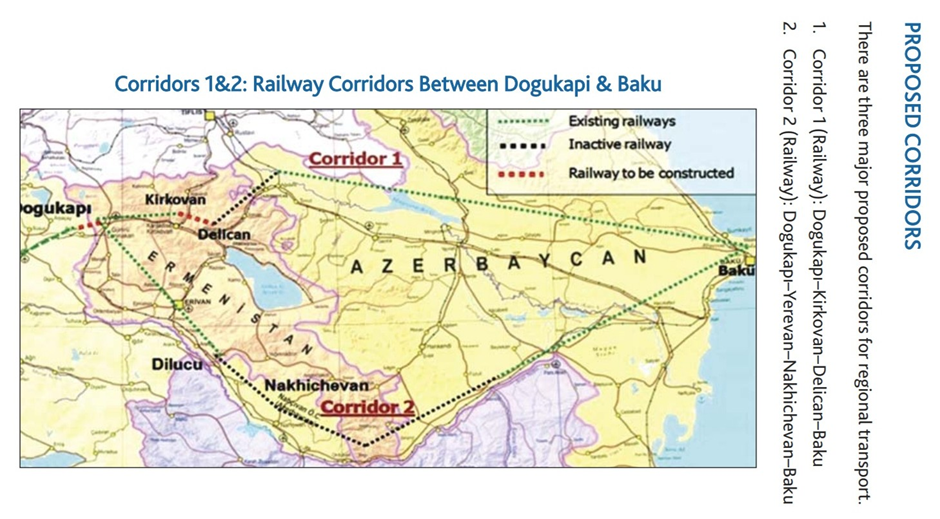
Proposal by the Turkish AVIM Center for two main railway corridors between Turkey and Azerbaijan through the territory of Armenia (2013). Source: Öymen O. Regional Integrated Transport Corridors Project // Review of Armenian Studies. No. 27. Ankara: AVİM (Avrasya İncelemeleri Merkezi), 2013. P. 7. Карта: “Corridors 1&2: Railway Corridors Between Dogukapi & Baku”.
It is important to emphasize: the key constraint for the operation of the entire system lies not in the South Caucasus section, but in the Turkish infrastructure. The sole Divrigi–Erzurum–Kars line, approximately 660 km long, remains a single-track, non-electrified line with a capacity of about 750,000 tons per year. This makes this section the main “bottleneck” of the Middle Corridor. Under these conditions, the construction of a new Kars–Diluju line appears practical and rational.
Additional challenges arise in the southern direction as well. The Ordubad–Meghri–Agbend section, with a total length of about 60 km, runs through difficult terrain—in the narrow Araks Valley with a zigzagging track alignment (in some sections, the railway also runs as close as 50–60 m to the Iranian bank of the Araks). The key constraint is related not only to the complex track alignment and the nature of the terrain, but also to the single-track nature of the line and the lack of a sufficient number of passing loops.
On the 44.2-km Armenian section in Meghri, the passage of a single freight train along the existing track alignment can take up to 1.5 hours. Under these conditions, an oncoming train cannot enter the section until it is completely cleared, which sharply limits the line’s capacity and turns it into yet another “bottleneck” along the entire route.
This means, for example, that the provision regarding “unimpeded service” cannot be interpreted as non-stop train movement. On the contrary, to ensure high capacity, infrastructure modernization is necessary, including the creation of passing stations, double-track sections where the terrain permits, and coordinated traffic control systems.
As noted, the zigzagging track alignment is one of the key problems of this section, as well as the adjacent section in the NAR. To improve efficiency, the construction of new tunnels with a total length of about 6 km is required, which will reduce the length of the section from 44.2 to approximately 38 km and increase the average speed. Without straightening the route, even with passing lanes, capacity will remain limited.
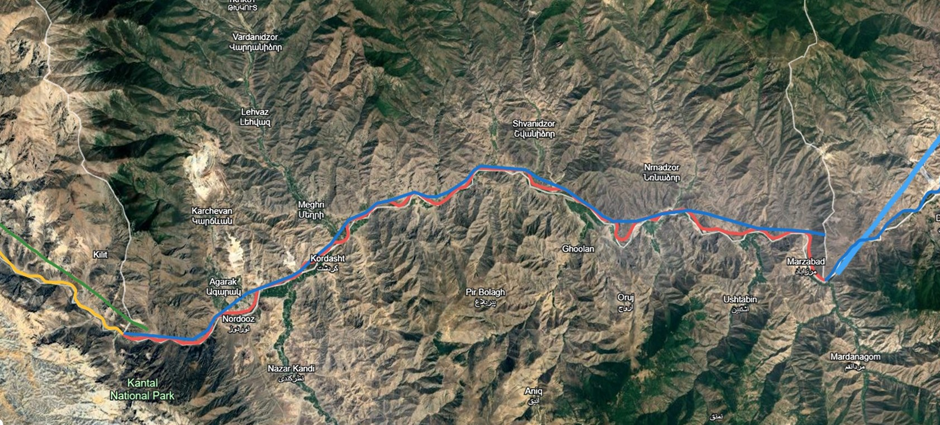
Proposal to “straighten” the Meghri Line. The old Soviet railway line (44.2 km) is shown in red. The proposed option with tunnels is shown in blue (38 km). A higher-resolution map is available at the link – https://earth.google.com/earth/d/1rRudyKhgZsLqcZPoTqzDm3xC_Rt_nLLb?usp=sharing
Thus, without comprehensive modernization—both organizational and engineering—this section will be unable to ensure sustainable growth in freight traffic and will remain a systemic bottleneck for the entire transport corridor. The same is true for the southern section of the railway through the territory of the NAR, where the relief of the terrain and the contours of the route repeat the characteristics of the Meghri section.
The need to change wheel sets (from 1,435 to 1,520 mm) at the border between Turkey and Nakhichevan remains a separate issue, which increases cargo handling time and reduces the route’s throughput capacity.
Thus, the Kars–Diluju project does not address the key constraints of the region’s transport system but rather duplicates existing routes while leaving the main bottlenecks on the Divrigi–Kars and Ordubad–Meghri–Agbend sections intact. Under these circumstances, a more rational solution would be to develop existing routes and modernize the infrastructure, particularly the Turkish segment. Redirecting resources, including funds earmarked for the construction of the Kars–Diluju line (€2.4 billion), toward the modernization of the Divrigi–Kars line could significantly increase the capacity of the entire system and ensure the effective functioning of the Middle Corridor.
A combined but significantly more promising alternative could be the construction of a short section from Kars – Ani (approximately 60 km) with a connection to the Gyumri–Masis line in the Anipemza area or the village of Getap, which would create the geographically most optimal and rational link between Turkey and the South Caucasus railway network. This option combines not only transportation but also economic and social components: it has the potential to stimulate tourism development, including by improving access to the Ani historical complex, as well as increase visitor numbers to Turkey’s eastern regions, which have traditionally remained the most isolated and socio-economically underdeveloped in the country.
(To be continued)